
Last updated November 25, 2026
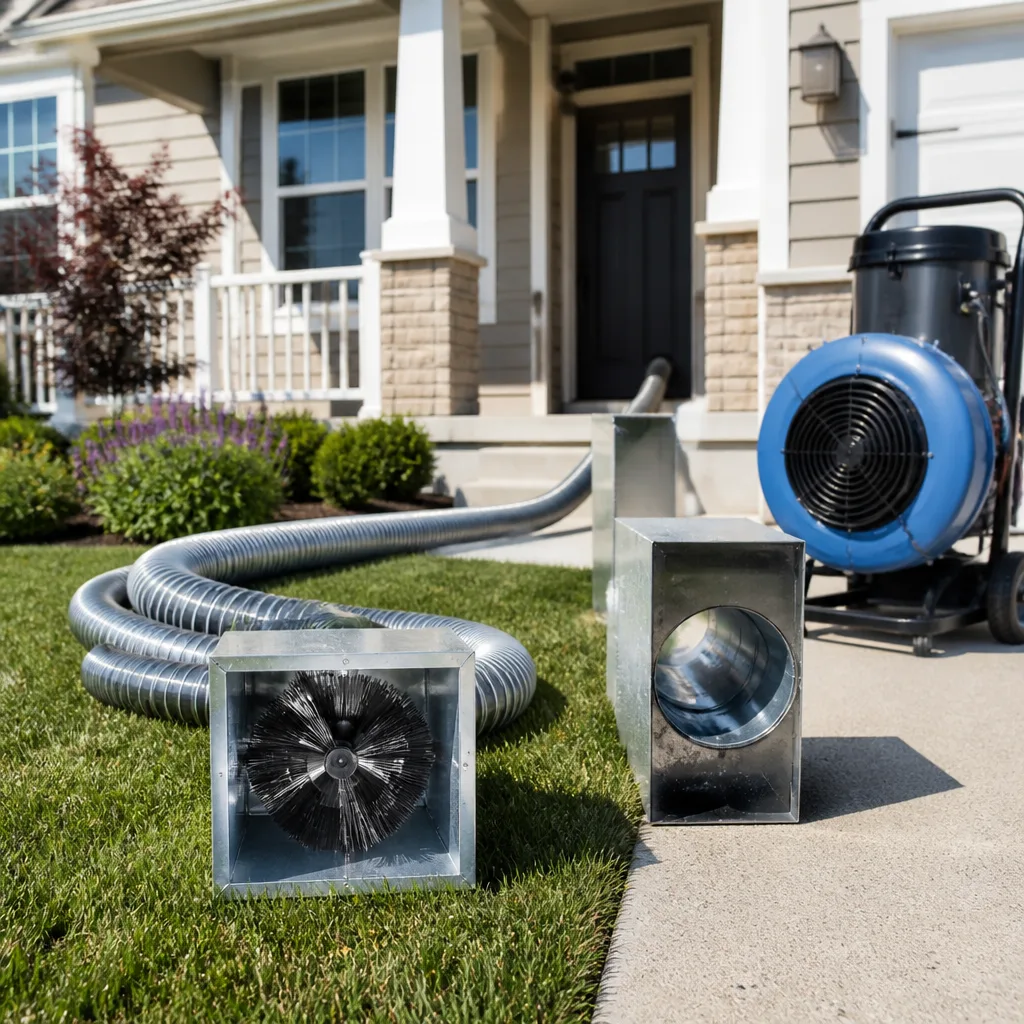 Whole-home duct cleaning
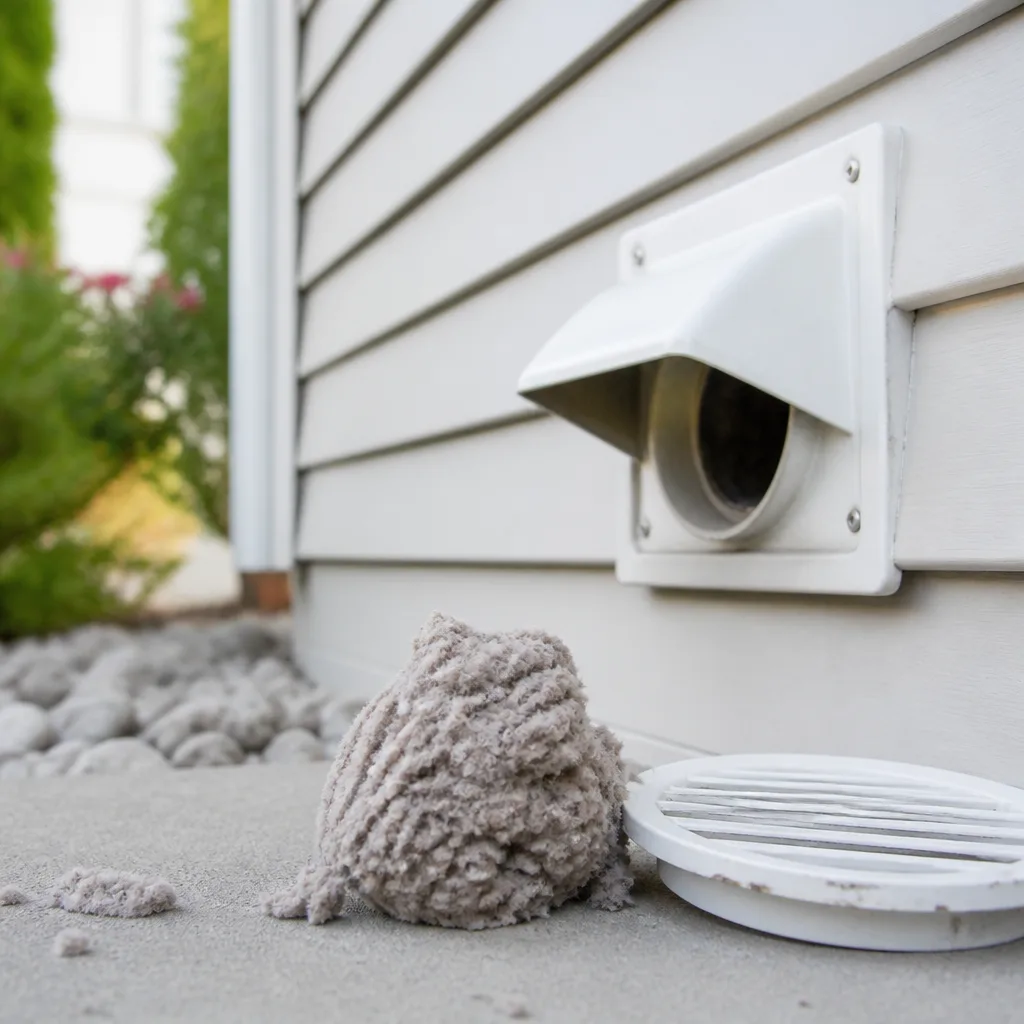 Dryer vent cleaning
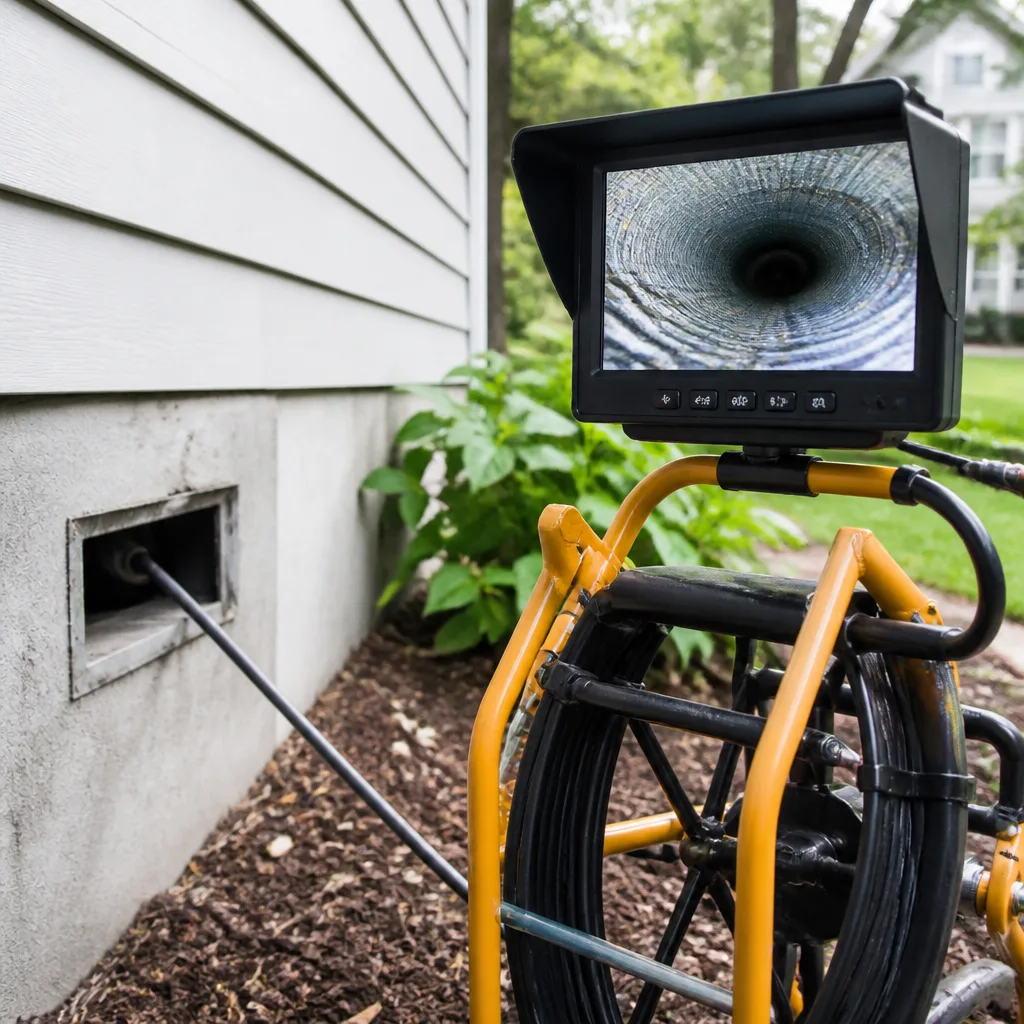 Camera inspection
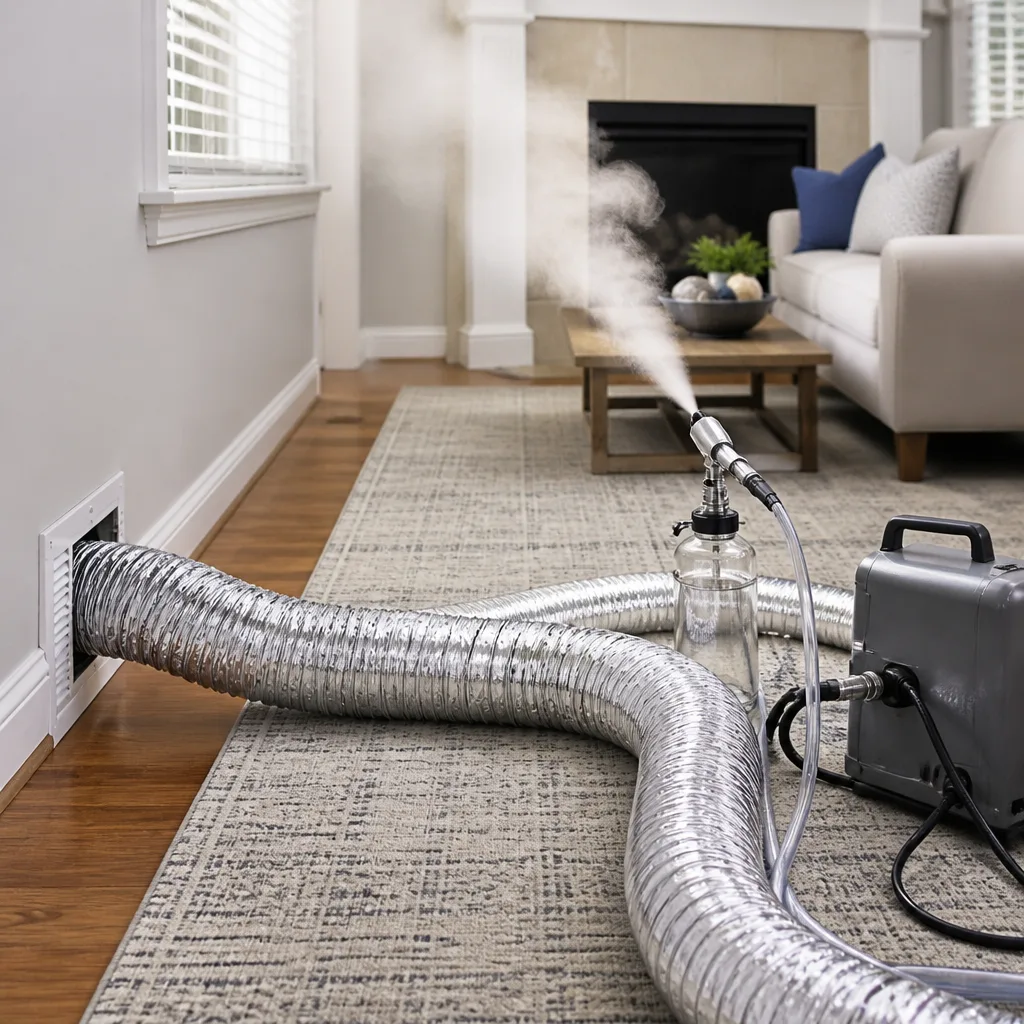 Sanitizing & deodorizing
Whole-system duct and dryer vent check with before-and-after photos - you see exactly what came out of your vents
That "$99 whole-house special" is a bait ad - the real number appears once they are in your hallway, or the "clean" is a shop-vac at the register. We photograph the inside of your ducts before and after instead.
The Complete Guide to Air Duct Cleaning in Federal Way
A shop-vac at the register vent and a truck parked in the driveway doesn’t constitute duct cleaning, yet that describes a great deal of what gets sold in Federal Way for $99. The problem isn’t that people are careless with their money. It’s that most homeowners have no framework for judging whether the work was actually done right. You can’t see inside the ducts. You can’t tell if the technician reached the branches or only the first few feet. This guide gives you that framework. We’ll walk through what source removal actually means, why Federal Way’s climate behaves differently than a dry inland city, what to physically verify before and after a service, and how to use the NADCA ACR standard as a baseline when you compare any contractor.
Quick Answer
A proper air duct cleaning removes accumulated dust, debris, and biological growth from the entire system – supply ducts, return ducts, and the air handler – using contact-based agitation and negative-pressure containment, not a shop-vac at the vents. In Federal Way, the mild, damp Pacific Northwest climate makes moisture and mold pressure a bigger concern than in drier regions, so a complete clean should also involve source removal rather than blowing dust back into the living space. A written estimate sets the final price, and the estimate should be free.
Styles & brands we work with
- Whole-home duct cleaning
- Dryer vent cleaning
- Camera inspection
- Sanitizing & deodorizing
Table of Contents
- What “Source Removal” Actually Means
- How Pacific Northwest Humidity Affects Federal Way Ductwork
- Supply Ducts, Return Ducts, and the Air Handler: Why All Three Matter
- What You Can Physically Verify Before, During, and After
- Why NADCA ACR Standards Exist and How to Use Them
- Dryer Vent Cleaning: The Overlooked Fire Risk
- Duct Repair and Sealing: Fixing What Caused the Problem
- What Air Duct Cleaning Costs in Federal Way
What “Source Removal” Actually Means
Source removal means dislodging the contaminants from the surfaces inside the ductwork and then capturing them, so they leave the system entirely. That’s distinct from a blow-and-vacuum method, where air pressure knocks dust loose and it either settles somewhere else in the system or drifts into your living room.
The difference is contact. A rotary brush system, like a Rotobrush, physically scrapes the inside walls of the duct as it travels. Dust and debris that have bonded to the metal or flex duct surface don’t come off with airflow alone. You need mechanical contact, which is why commercial restoration contractors use rotary brush equipment rather than powered vacuums alone.
Here’s how a source-removal clean typically runs in Federal Way:
- Containment setup. Negative pressure is established at the air handler or a main trunk so that anything dislodged gets pulled toward the collection unit, not into the rooms.
- Filtration. Abatement Technologies air filtration equipment captures fine particulate during service, so what gets dislodged doesn’t get recirculated into your breathing air.
- Agitation. A rotary brush or air whip travels the length of each branch, scrubbing the surfaces. This is the contact step that separates real cleaning from window dressing.
- Extraction. Loose material is pulled into a HEPA-grade collection system.
- Verification. Before-and-after photos of the ducts, taken from the same access points, show what was removed.
When someone quotes you a very low figure, ask what equipment they’ll use and whether they’ll agitate the duct interior. If the answer is a shop-vac on the vent, keep calling. An air duct cleaning job worth the money looks mechanically different from the cheap version.
How Pacific Northwest Humidity Affects Federal Way Ductwork
Federal Way sits in a climate that’s mild and damp most of the year. Compared with a dry inland city where duct dust stays powdery and inert, damp air gives dust particles something to cling to and gives mold spores a friendlier environment once they reach a surface with any moisture on it.
What that actually means for your ductwork:
- Dust clings harder. In a damp climate, dust and lint pick up ambient moisture and bond more tightly to duct walls. That’s one reason contact agitation matters more here than it would in a dry region.
- Mold pressure is real, not theoretical. The Pacific Northwest sees more days of high outdoor humidity than inland areas. Any condensation on a cool duct surface becomes a potential growth site.
- Air handler coils and drain pans are the first place to look. A damp climate stresses the condensate system most. If the drain pan isn’t draining, moisture sits and organic material starts to bloom. Cleaning the ducts without addressing the air handler is only part of the job.
- Musty odors are a signal, not a nuisance. If you notice a smell that only appears when the HVAC system runs, you have a source problem. It won’t resolve on its own.
Allergen complaints in Federal Way homes often track to the same pattern: mild climate, steady accumulation, no scheduled service in years. When our technicians run a cleaning in the region, they typically find heavier surface bonding on duct walls than the same age of system would show in a drier climate. The equipment we use – the same class of machines trusted by commercial restoration contractors – is chosen for that reality.
Supply Ducts, Return Ducts, and the Air Handler: Why All Three Matter
A complete duct clean addresses three distinct parts of the system, and skipping any of them leaves the job unfinished.
Supply ducts
These carry conditioned air from the furnace or air handler out to the rooms. They’re the ducts you see behind the register grilles. Over time they pick up dust, lint, and sometimes construction debris if the home has been renovated.
Return ducts
These pull air back from the rooms and return it to the air handler. Return ducts tend to be the dirtiest part of a system because they’re the initial capture point for airborne dust. Many $99 jobs skip the returns entirely, which means the dust that matters most never gets touched.
Air handler
The air handler is the furnace cabinet, the blower, and (if you have air conditioning) the condensing coil and drain pan. Dirt accumulates here directly, on the components. A HVAC cleaning that includes the air handler removes the source of the problem, not just the symptoms down the line.
Why this matters in Federal Way specifically: in a mild, damp climate the air handler is also where moisture collects. Cleaning the supply ducts while leaving the wet pan and dirty coil is like mopping a floor while the faucet keeps running. All three parts need to be addressed in the same visit so the whole system comes back to a clean baseline.
If you’re comparing quotes, ask directly whether the price covers supply ducts, return ducts, and the air handler. A quote that covers only supply ducts is not a full-system clean, and you should know that before anyone arrives.
What You Can Physically Verify Before, During, and After
You don’t have to take a contractor’s word for it. There are concrete things you can check yourself, and a company that’s confident in its process will welcome the scrutiny.
Before the service
- Ask how they’ll agitate the ducts – mechanical brush, air whip, or nothing. The answer tells you whether they intend source removal.
- Ask whether they’ll photograph duct interiors before and after.
- Ask if the price covers supply, return, and air handler. Get a written estimate.
- Ask whether they’ll install and remove containment and use filtration equipment. Those are the two things that keep dust out of your indoor air.
During the service
- Watch the access point. A real clean requires cutting access holes in the trunk and branches or opening existing ones. If no visible access work is done, ask what’s happening.
- Notice the air inside the house. If a technician is running a shop-vac while blowing air through the system, dust will recirculate into the room. Proper negative-pressure and filtration setup protects against that.
- Look at the equipment. A rotary brush head is a recognizable piece of machinery – a flexible shaft with a spinning brush on the end. A powered vacuum connected to a hose is not the same thing.
After the service
- Compare before-and-after photos for each branch. The images should be clearly from the same location inside the duct.
- Check that the access holes are properly sealed. A cut that’s left unsealed leaks and undoes part of the work.
- Run the system and note airflow at the registers. You should notice a difference – the “see the difference in airflow” language we use is meant to be literal, not a tagline.
- Ask for a written record of what was cleaned. You should know which supplies and returns were serviced.
If a contractor can’t or won’t do these things, that’s information. A proper job leaves behind evidence, and the evidence is photos and airflow, not a receipt with a vacuum sticker on it.
Why NADCA ACR Standards Exist and How to Use Them
The National Air Duct Cleaners Association (NADCA) publishes the Assessment, Cleaning, and Restoration standard, known as ACR. It exists because the air duct cleaning industry developed a reputation for low-cost, high-volume work that often left systems dirtier than before. The ACR standard sets out what a legitimate cleaning should include: assessment of the system, a defined cleaning scope, source removal, and post-clean verification.
You don’t need to memorize the standard. You need to know it exists and use it as a yardstick. When you’re getting quotes in Federal Way, ask a straightforward question:
- Does your process include an assessment of the system before you quote?
- Do you follow the NADCA ACR standard for cleaning scope?
- Are you doing source removal, or are you using a blow-and-vacuum method?
These questions sort contractors quickly. A company that follows the standard knows what you’re asking and can answer plainly. A company that specializes in the $99 coupon model usually can’t. The standard also protects against the most common bait-and-switch pattern: a low advertised price followed by an in-person upsell once the technician is inside the home.
The way to avoid that pattern is to agree to a flat price per system before any work begins. That’s the pricing structure we use on every job, and it means the price you see in the written estimate is the price you pay. If a company quotes a low base and won’t commit to a final number, that’s a signal.
Dryer Vent Cleaning: The Overlooked Fire Risk
Most Federal Way homeowners have their ducts cleaned and never think about the dryer vent. That’s a mistake. Lint accumulation inside the dryer vent exhaust line is a leading cause of residential fires, and it’s an entirely preventable problem.
The mechanics are simple. Every load of laundry produces lint. The dryer’s lint trap catches the visible portion, but fine lint threads pass through the screen and deposit along the vent duct. Over time that lining gets thick, restricts airflow, and raises the temperature inside the vent. If a heat source – gas dryer or electric element – comes into contact with that lining, you have a fire.
Signs a Federal Way dryer vent needs cleaning:
- Clothes take longer than one cycle to dry.
- The dryer or the wall behind it feels hot to the touch after a cycle.
- You notice a burning or hot, dusty smell while the dryer runs.
- The exterior vent flap doesn’t open fully when the dryer runs.
- Lint accumulates around the exterior vent hood.
dryer vent cleaning is part of what a full-service duct contractor should offer, and it’s one of the reasons we handle it ourselves rather than sending you to a specialist. The same equipment that cleans a duct branch also clears a dryer vent safely.
Duct Repair and Sealing: Fixing What Caused the Problem
Cleaning ducts without addressing the leaks that let contaminants in is a temporary fix. Every Federal Way home has at least a few duct seams, joints, or flex connections that have loosened over time. Those leaks do two things: they let attic dust, crawlspace air, and outdoor pollutants enter the supply stream, and they let conditioned air escape before it reaches the rooms you’re trying to heat or cool.
Duct repair and sealing closes those gaps. The work typically includes:
- Locate the leaks. Accessible duct runs are inspected for separated joints, torn flex duct, crimped sections, and gaps at boot connections.
- Seal the seams. Joints are sealed with mastic or approved sealant so the duct run is continuous.
- Repair flex and rigid sections. Damaged sections are repaired or replaced so airflow isn’t obstructed.
- Rebalance airflow. After sealing, the system is checked to confirm airflow reaches the registers it’s supposed to reach.
Sealing has a compounding benefit: once the duct system is tight, the cleaning you paid for stays effective for longer. Loose joints that continually draw in attic or crawlspace dust will undo a clean in a single heating season. And sealing is also where efficiency gains come from – conditioned air stays in the system where you’re paying for it to go.
This is the “we fix what caused the problem, not just what’s visible” part of the job. A duct-only company can clean a system and leave the leaks untouched. Repair and sealing closes the loop.
What Air Duct Cleaning Costs in Federal Way
There’s no honest single figure for air duct cleaning, because the range depends on system size, number of branches, whether the returns and air handler are included, and whether repair or sanitizing is part of the job. What we can give you is the structure of how a quote should be built, so you can evaluate any estimate you receive.
A typical air duct cleaning estimate in Federal Way breaks down as follows:
- Full-system cleaning (supply, return, air handler): quoted per system, not per vent.
- Dryer vent cleaning: quoted as a separate scope or bundled with the duct cleaning when requested.
- Duct repair and sealing: quoted after the accessible ductwork is inspected, because the scope depends on how many leaks and separations are found.
- Sanitizing treatment: quoted as an add-on after mechanical cleaning is complete.
- Air quality product installation (Aprilaire, Honeywell): quoted per product selected.
What you should not accept is a per-vent price. Per-vent pricing encourages contractors to add vents you don’t need and discourages them from being thorough on the ones you have. A whole-system clean should be quoted as a whole system.
Why are some quotes so much cheaper?
The cheap quotes skip steps. They don’t use contact agitation. They don’t set up negative pressure or filtration. They don’t clean the returns and often don’t clean the air handler. They don’t photograph before and after. They don’t offer duct repair or sealing. Each of those omissions saves the contractor money and costs you the clean you thought you were buying.
If a quote is dramatically lower than the rest, ask the contractor specifically what it includes. If the answer doesn’t cover all three parts of the system plus containment and filtration, that’s where the difference lives.
How do I know the work was actually done?
Photos of the duct interiors before and after, taken from the same locations, are the clearest evidence. Airflow at the registers is the second check. A written record of which branches and returns were cleaned is the third. All are reasonable to ask for. A contractor who resists that request is telling you something.
Common Mistakes to Avoid
- Booking based on a low coupon price. Coupons set an expectation that rarely matches the final invoice. Ask for a flat price per system in a written estimate before booking, and hold the contractor to it.
- Hiring a per-vent priced service. Per-vent pricing encourages shortcuts on the vents that matter and upcharges on the vents you have. Whole-system pricing aligns the contractor’s interest with yours.
- Skipping the return ducts and air handler. The returns are often the dirtiest part of a Federal Way system, and the air handler is where moisture and bio-growth typically start. A supply-only clean leaves both problems in place.
- Accepting a blow-and-vacuum-only process. Without contact agitation, dust stays bonded to the duct walls. What doesn’t come off in the clean drifts back into your air the next time the system runs.
- Getting ducts cleaned without addressing leaks. A system with loose joints pulls dust back in within a heating season. Repair and sealing is what makes a clean last.
- Forgetting the dryer vent. A duct cleaning that ignores the dryer vent leaves one of the most preventable residential fire risks in the house. It belongs in the scope.
- Not asking for photos. Photos of the ducts before and after are the most direct proof of what was removed. If nobody offers them, ask.
See the difference
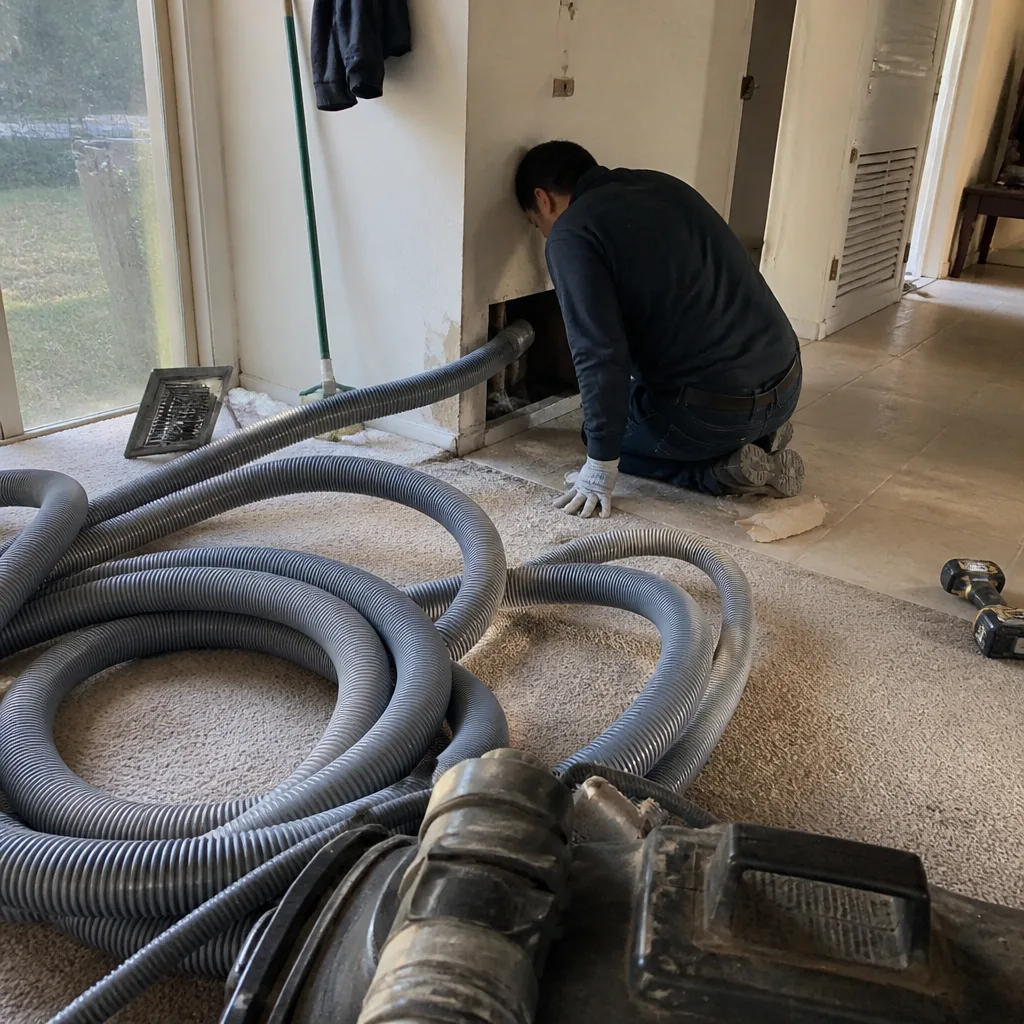 Before
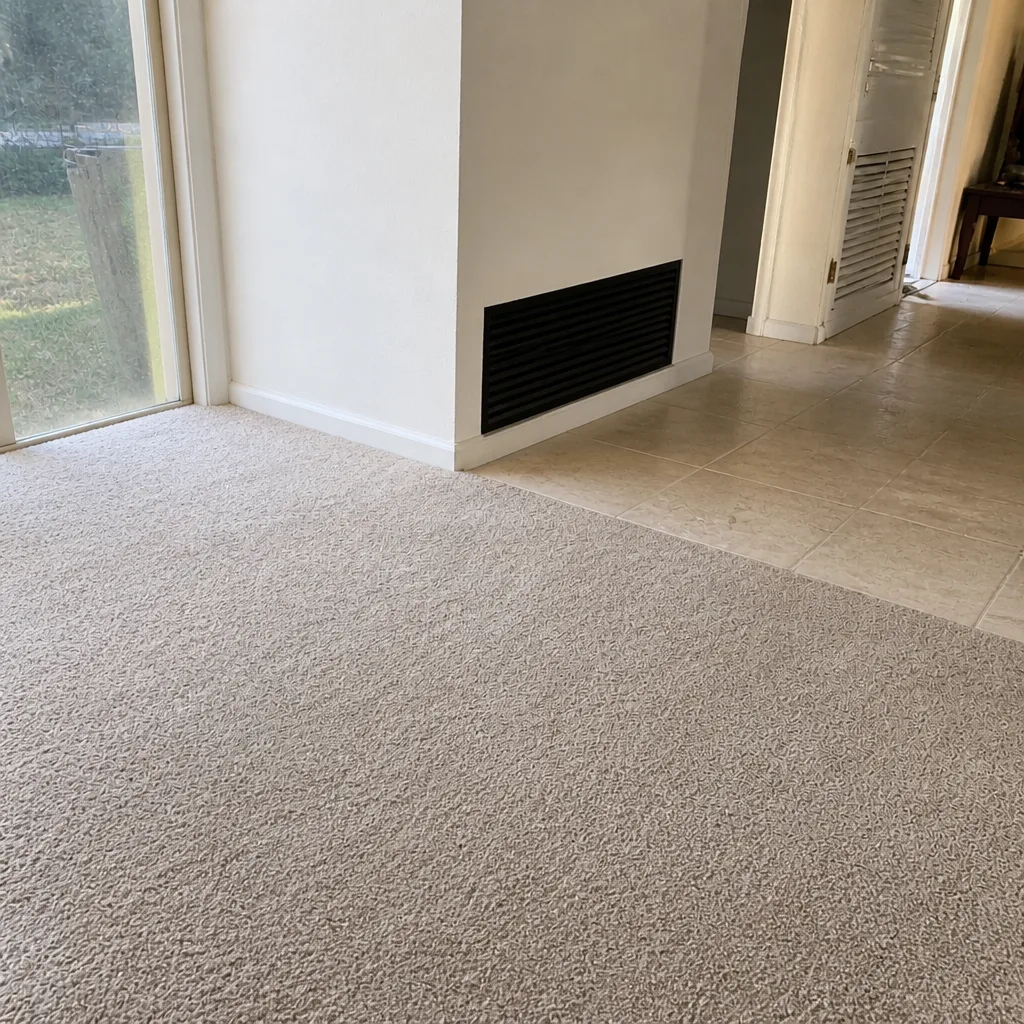 After
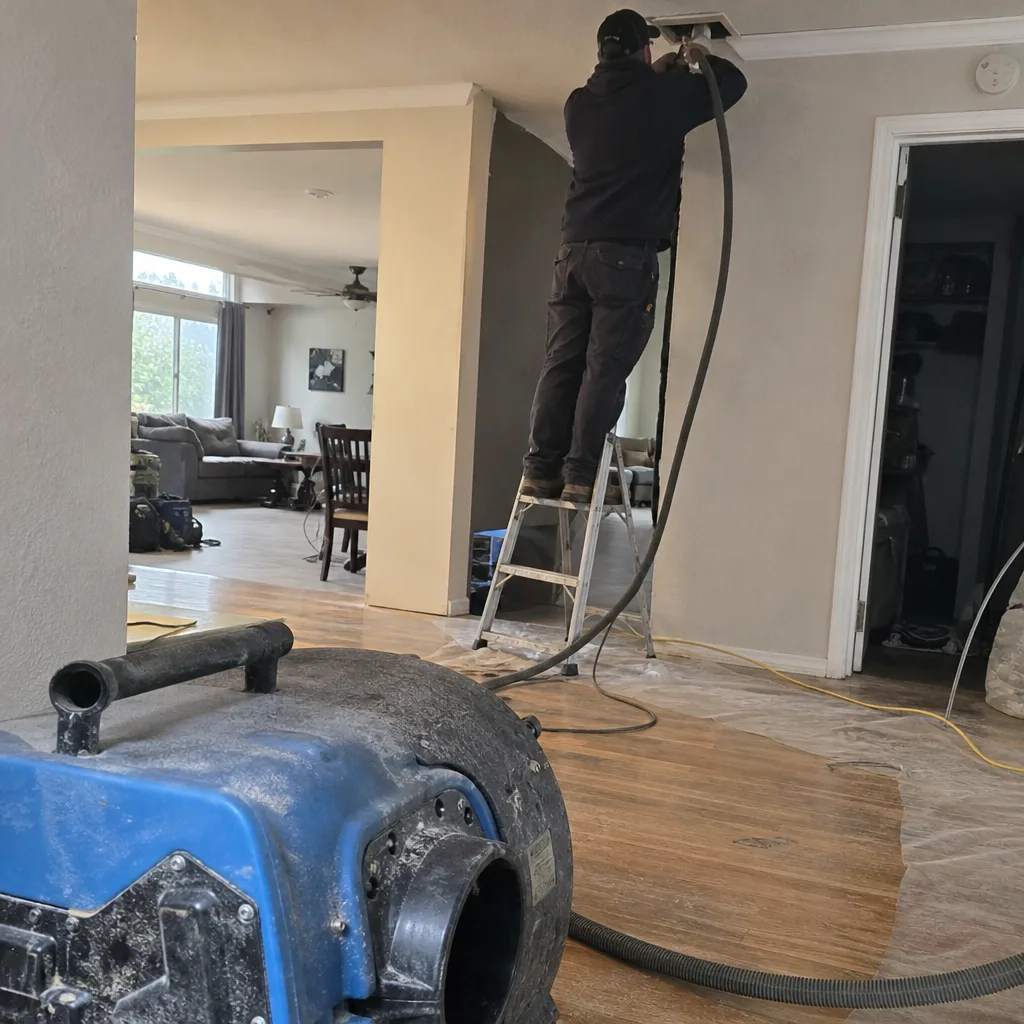 Before
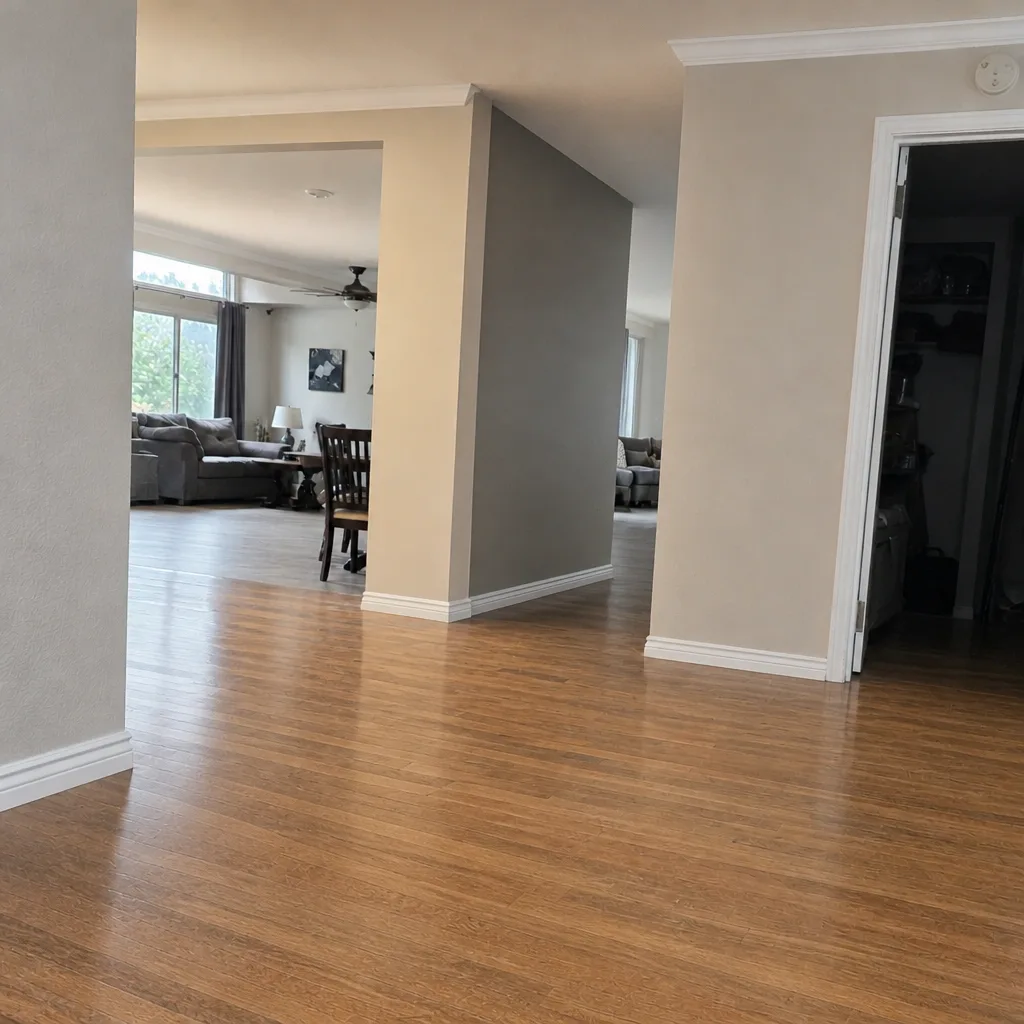 After
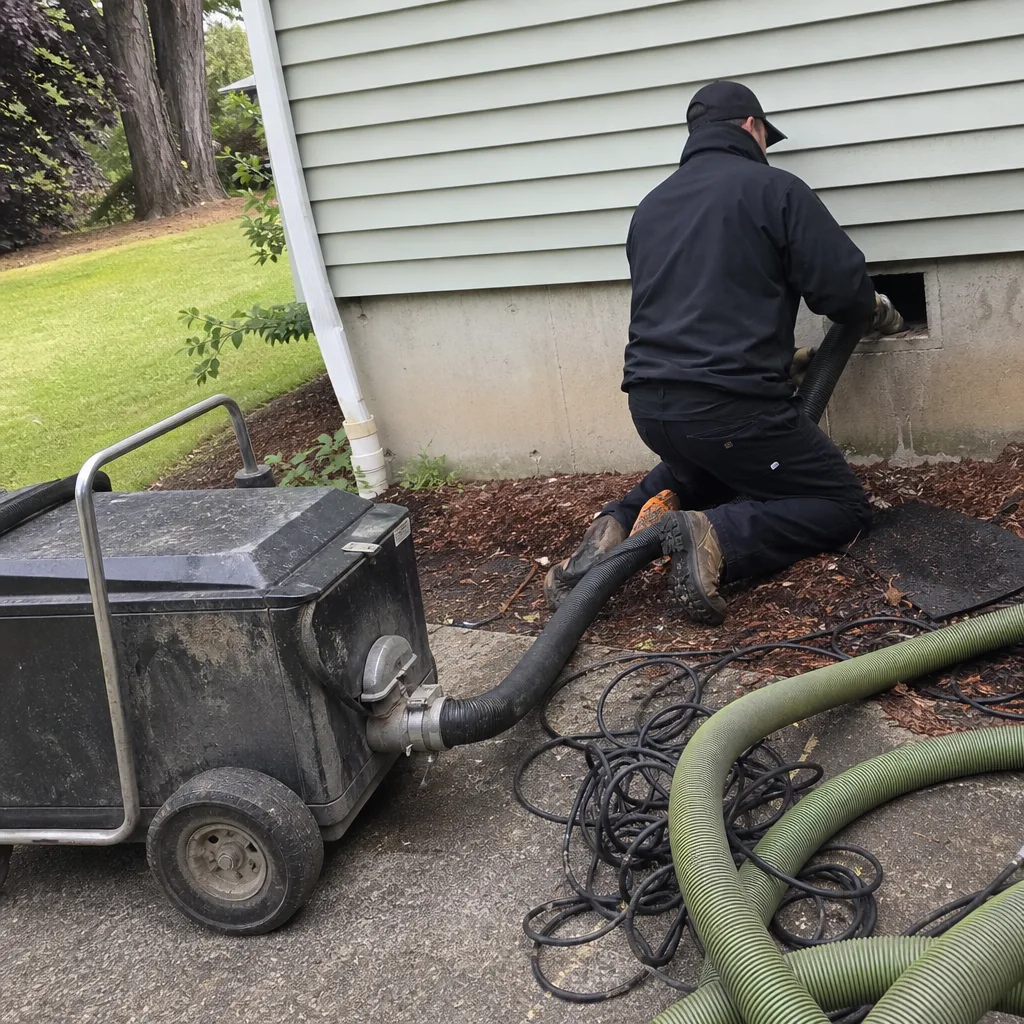 Before
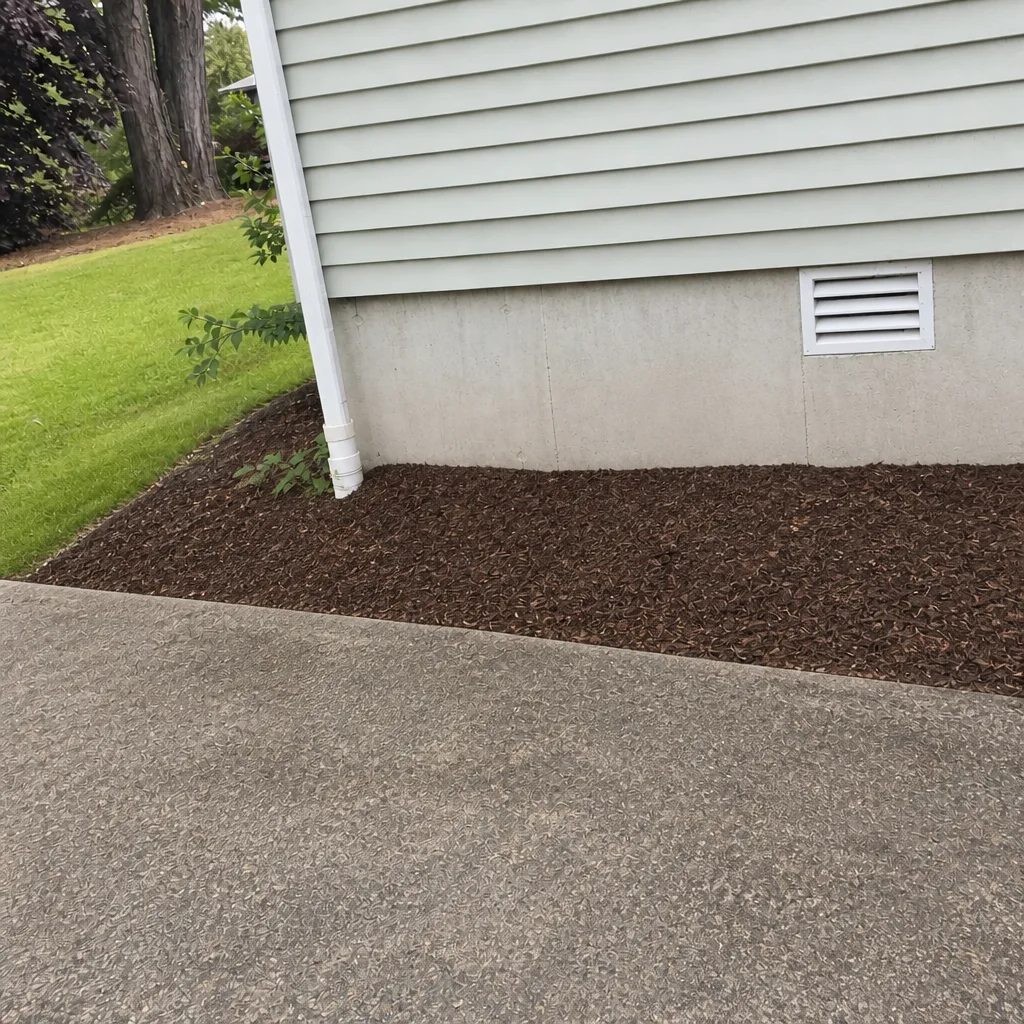 After
When to Call a Professional
Air duct cleaning is not an emergency call, but there are clear signs to schedule a service. The main ones: visible dust blowing from the registers when the system turns on (that’s the classic “source problem” signal, not just a draft); a musty or dusty odor that appears only when HVAC runs; increased allergy or respiratory symptoms in the home that don’t have another explanation; a system that hasn’t been serviced in several years; a recent renovation or construction project that generated significant dust; and a dryer that takes longer than one cycle to dry clothes.
If your utility bills are climbing without an obvious reason, duct leaks are worth investigating. If you’ve recently moved into a Federal Way home and don’t have a record of prior duct service, a cleaning is a reasonable place to start.
Federal Way Air Duct Cleaning offers free estimates in Federal Way. Call (833) 482-6220. We answer 24/7. Fast dispatch from 7am to 7pm, Sunday through Friday.
For a broader look at the services we offer across the area, start with the Federal Way air duct cleaning service overview.
Frequently Asked Questions
Federal Way air duct cleaning is quoted per system, not per vent, and the final price depends on system size, number of branches, whether the returns and air handler are included, and whether repair or sanitizing is added. A written estimate sets the final price before work begins. Call (833) 482-6220 for an exact quote – estimates are free.
The clearest evidence is before-and-after photos of the duct interiors, taken from the same locations. Airflow at the registers and a written record of which supplies, returns, and branches were serviced provide the second and third checks. A company that’s confident in its process should provide all three. Call (833) 482-6220 to book a service with photos included.
The cheap quotes leave out steps. They typically skip contact agitation, containment, filtration, and service of the returns and air handler. Each omission saves the contractor money and means the clean doesn’t remove the material you were trying to remove. Ask any low quote what’s included and compare scopes side by side. Call (833) 482-6220 to discuss our scope line by line.
Most homes don’t need it annually. Every few years is a reasonable baseline for a typical Federal Way home, sooner if there’s a renovation, pets, allergies, water intrusion, or a visible dust problem at the registers. The honest answer for any given home depends on what an inspection finds. Call (833) 482-6220 if you’re not sure where your system stands.
Yes. Duct repair and sealing are part of our scope, and the repair work happens after cleaning so the system is closed up tight once it’s clean. A duct-only contractor can clean and leave the leaks in place; we fix what caused the problem, not just what’s visible. Call (833) 482-6220 for a combined estimate.
We clean dryer vents as part of our service scope. Dryer vents are a leading cause of residential fires, and they’re often missed when homeowners schedule a duct cleaning. Bundling the two is efficient and addresses both fire risk and air quality in one visit. Call (833) 482-6220 to add dryer vent cleaning to your estimate.
The Bottom Line
The framework for judging air duct cleaning in Federal Way comes down to five things: contact-based agitation, containment and filtration during service, service of all three parts of the system (supply, return, air handler), verifiable before-and-after evidence, and a written flat price per system. Any contractor who can’t answer yes to all five is selling something other than a full-system clean. The equipment matters – rotary brush systems and professional filtration equipment are what separate a proper job from a shop-vac and a coupon – and the process matters at least as much. We fix what caused the problem, not just what’s visible, because a clean system with leaky joints is a temporary fix. Call (833) 482-6220 for a free estimate.
Written by the team at Federal Way Air Duct Cleaning.